articles

Translating Anger into Needs

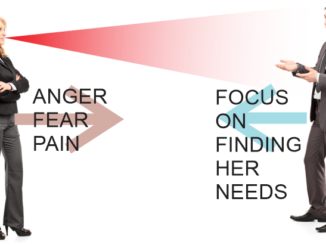
Here’s a central technique in Marshall Rosenberg’s ‘Non Violent Communication’. Underneath our anger, judgements, strategies, opinions, evaluations, and blame of others is our needs. All people have the same basic needs, for security, safety, happiness, protection, fulfillment, autonomy, peace, meaning, connection, etc. If we can recognize and connect with these universal needs that are consistent in all of us, we have a better chance of connecting and getting what each person wants. If we can see beyond the anger, blame, and judgements to the needs, new and often unexpected strategies of dealing with the situation may appear. Even if they don’t, being more conscious of the needs of ourselves and others can bring out more compassion in both. When we are being attacked by others the natural inclination is to be defensive and attack in return. This quickly escalates. Consider an alternative approach. Instead of seeing the attack coming from the other, look beyond it to the feelings and needs behind it. Don’t allow yourself to become hooked into the storyline…look beyond it to what is empowering it. When we or others use judgmental language we are more likely to disconnect, and to fail to identify and be able to resolve our underlying needs which we may not be conscious of (“I’m just damn angry! I don’t know why…”). Needs might be obvious… but often they are not. If you don’t know what the underlying issue is, you can help the other person to identify it in themselves and better […]
articles

3 Systems of Thought

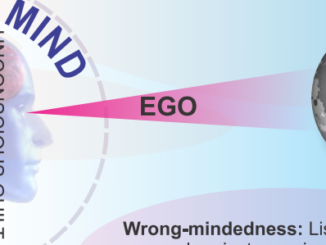
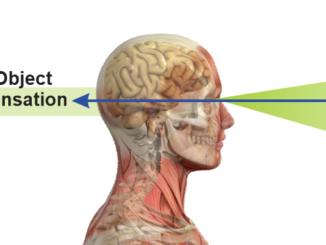
The PDF embedded in this page presents my interpretation of the three modes of thought available to us. The first is the standard mode of thought in this world. Our separation from God created such unimaginable guilt that this world literally had to be projected outside of us. The one mind of God that we all share then became split into billions of ‘minds’ and bodies, all of which appear to be separate from us. When we observe any person, object, idea, or thing outside of us our brain immediately ‘recognizes’ it, names it, recovers past memories or stored thoughts about it, which colors our interpretation of it. The idea at this point becomes more important than the thing we observing, which we no longer see rightly. A favorite plan of the ego is to hold grievances, which we tell ourselves will be healed when the other person ‘changes’, which they never will. The vast majority of the world is trapped in this circular thinking system. Under A Course in Miracles thought system, recognition, naming, and ideation (recovery of good or bad memories) still occurs, however at this point we are watching these patterns unfold in our minds and make a conscious decision to turn this entire encounter over to the Holy Spirit. The Holy Spirit sees all things as either Love, or a call for Love. Thus the Holy Spirit interprets the other persons ‘sins’ as illusory dreams that represent a call for Love, and that require not punishment […]
why BLM won't work
articles

Why BLM Won’t Work

It won’t work because the problem is in each one of us, not where we conveniently see the problems…. in everyone else. Few of us want to accept responsibility for that. After all, that’s what keeps the world going round and round. Until we decide to get off the boat.
Tired woman slumping over desk
articles

Cherish Your Morning Anguish

Usually a good sleeper, at 64 and after several years of a declining business which is now in a financial death spiral, I’ve developed a depressing habit of waking up at either 1:30 AM or 3:30 AM and beginning the long solitary trek through ‘morning anguish’. Morning anguish is my term for the early hour’s crashing waves of negativity that befalls those whose internal guidance system chooses the self-defeating rituals of worry to sleep, anguish to rest, and suffering to slumber. Why this occurs at random intervals is a partial mystery. The other part of the mystery is not really such a mystery. Maslow, bless his tedious scientific soul, wisely asserted that our needs are organized as a hierarchy, with the physiological needs (food, water, shelter, warmth) at the bottom. As a baby boomer product of the 1950’s, physiological needs were always relatively easy to meet. Jobs were plentiful and confidence blew like the wind. Life was challenging but there was always the unspoken assumption that the physiological material goods (like food) would flow to us by divine right and sanctity of our country of origin. If anything really went seriously bad your Dad would fix it, and if not he could still beat up anyone else’s Dad. Realistically, most of us probably won’t get to Maslow’s ‘self-actualization’ level, esteem happens intermittently on a rare good day, love and belonging is never all that sure, and we’ve all broken the safety rules with impunity in the name of fun. But […]